
Did you know that the global kitchen and bathroom cabinet market is expected to reach a staggering $225 billion by 2025? As homeowners increasingly prioritize sustainability and eco-friendly living, the demand for eco-friendly kitchen renovation materials has skyrocketed. Embarking on a green kitchen overhaul is not only a wise investment in your home’s future but also a powerful step towards a more sustainable lifestyle.
The concept of a ‘green’ or eco-friendly kitchen remodel involves the application of environmentally friendly methods and materials to refurbish a kitchen space. This approach aims to create a space that is aesthetically pleasing, beneficial to the environment, and promotes healthier living. By understanding the importance and benefits of a green kitchen, you can make informed decisions to reduce your environmental impact, save money in the long run, and enjoy a more sustainable living space.
Key Takeaways
- Eco-friendly kitchen renovation materials can significantly reduce your environmental impact.
- Green kitchens are cost-effective in the long run, saving you money on energy and maintenance costs.
- Sustainable kitchen design promotes a healthier living space with improved indoor air quality.
- Investing in energy-efficient appliances and water-saving fixtures can further enhance the eco-friendliness of your kitchen.
- By working with a green kitchen remodeling contractor, you can ensure your renovation project aligns with your sustainable goals.
Understanding the Importance of Green Kitchens
Embracing an eco-friendly lifestyle starts at home, and your kitchen is a prime location to make a sustainable impact. Green kitchens not only reduce your environmental footprint but also provide long-term cost savings and create a healthier living space for you and your family.
Reducing Environmental Impact
By choosing sustainable materials and energy-efficient appliances, green kitchens significantly decrease energy consumption and waste production. This environmentally-conscious approach helps conserve natural resources and minimizes your carbon footprint, contributing to a greener future.
Cost-Effectiveness in the Long Run
While the initial investment in eco-friendly kitchen upgrades may be higher, the long-term savings on utility bills and maintenance costs make green kitchens a wise choice. Energy-efficient appliances and sustainable materials often pay for themselves over time, leading to a more cost-effective and financially responsible living space.
Healthier Living Space
Green kitchens prioritize the well-being of their occupants by incorporating natural light, proper ventilation, and the use of non-toxic materials. This creates a healthier indoor environment, reducing the risk of exposure to harmful chemicals and improving air quality for a more comfortable and rejuvenating cooking and dining experience.
By understanding the multifaceted benefits of green kitchens, you can make informed decisions to create a sustainable, cost-effective, and healthier living space for your home.
What Makes a Kitchen Green?
Creating a sustainable, eco-friendly kitchen requires a multifaceted approach that prioritizes the use of sustainable kitchen materials, energy-efficient design, and a zero-waste mentality. These key elements work in harmony to minimize the environmental impact of your kitchen and promote a healthier, more responsible living space.
Sustainable Materials
The foundation of a green kitchen lies in the selection of sustainable kitchen materials. These can include renewable resources such as bamboo, cork, and reclaimed wood, as well as recycled or repurposed materials like recycled glass, metal, and stone. By choosing materials that are environmentally friendly and long-lasting, you can create a kitchen that is both beautiful and eco-conscious.
Energy Efficiency
Energy efficiency is crucial in a green kitchen. This involves the installation of energy-efficient design features, such as Energy Star-rated appliances, LED lighting, and proper insulation to reduce energy consumption. Additionally, incorporating passive design elements, like strategically placed windows and skylights, can maximize natural light and minimize the need for artificial lighting.
Zero-Waste Mentality
A green kitchen also embraces a zero-waste strategies approach, minimizing the amount of waste generated and promoting a circular economy. This can be achieved through the use of reusable storage containers, composting food scraps, and implementing recycling systems. By implementing these waste-reducing practices, you can significantly reduce your kitchen’s environmental footprint.
| Sustainable Kitchen Material | Benefits |
|---|---|
| Bamboo | Renewable, durable, and biodegradable |
| Recycled Glass | Reduces waste, unique aesthetic appeal |
| Reclaimed Wood | Environmentally friendly, provides character |
“A green kitchen is not just about the materials; it’s a holistic approach to creating a space that respects the environment and promotes sustainable living.”
Elements of a Green Kitchen
When it comes to creating an eco-friendly kitchen, the key elements to consider are the use of sustainable materials and the incorporation of energy-efficient appliances. These two factors play a crucial role in reducing the environmental impact of your kitchen space while ensuring long-term cost-effectiveness and a healthier living environment.
Eco-Friendly Materials
Selecting eco-friendly kitchen materials is essential for a green kitchen overhaul. Materials like bamboo, recycled glass, and reclaimed wood not only add a unique, earthy aesthetic to your kitchen but also significantly reduce your carbon footprint. These sustainable options are durable, renewable, and often require less energy to manufacture compared to traditional materials.
- Bamboo: A fast-growing and highly renewable grass, bamboo is an excellent choice for countertops, cabinets, and flooring.
- Recycled glass: Recycled glass countertops and backsplashes offer a visually stunning and eco-friendly alternative to traditional options.
- Reclaimed wood: Repurposing reclaimed wood for cabinetry, shelves, and accent walls adds character and reduces waste.
Energy-Efficient Appliances
In addition to sustainable materials, incorporating energy-efficient kitchen appliances is crucial for a green kitchen transformation. ENERGY STAR-rated models are designed to consume less energy and water, leading to significant cost savings and a smaller environmental footprint.
- Refrigerators: Look for ENERGY STAR-certified refrigerators that use up to 25% less energy than standard models.
- Dishwashers: ENERGY STAR-rated dishwashers can save up to 3,870 gallons of water per year compared to conventional models.
- Ovens and Cooktops: Efficient electric or induction cooktops and ovens minimize energy consumption and reduce carbon emissions.
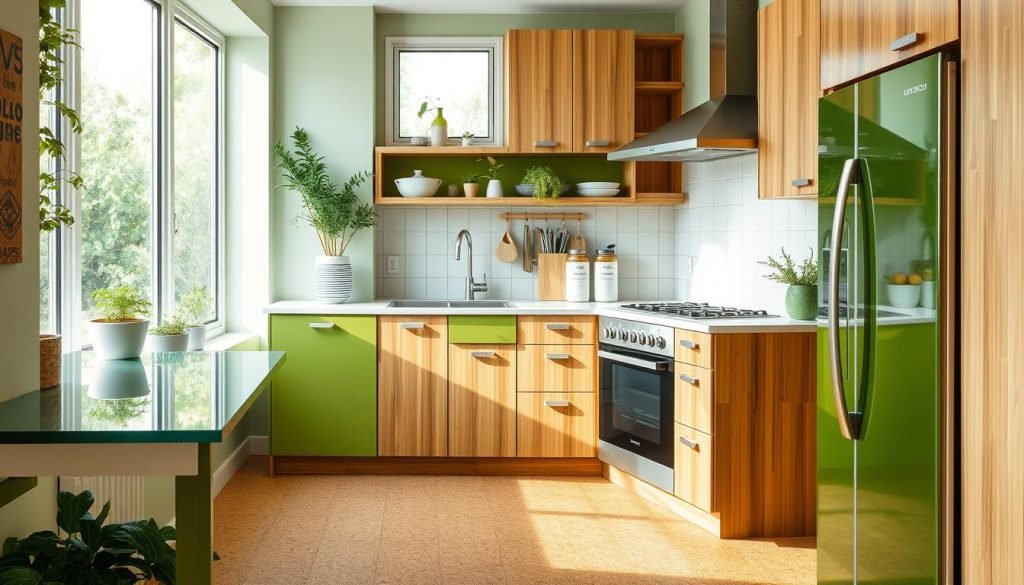
“Embracing eco-friendly materials and energy-efficient appliances is a key step towards creating a sustainable, future-proof kitchen.”
By carefully selectingeco-friendly kitchen materialsandenergy-efficient kitchen appliances, you can transform your kitchen into a green oasis that benefits the environment, your wallet, and your overall well-being.
Sustainable Kitchen Designs and Layouts
Crafting a sustainable kitchen goes beyond simply choosing eco-friendly materials. It also involves designing the layout and features of the space to maximize energy efficiency and reduce environmental impact. By incorporating sustainable design principles, you can create a kitchen that is not only visually appealing but also mindful of its carbon footprint.
One key aspect of sustainable kitchen design is the strategic placement of windows and lighting. Maximizing natural light can significantly reduce the need for artificial lighting, cutting down on energy consumption. Additionally, implementing energy-efficient lighting fixtures, such as LED bulbs, can further enhance the kitchen’s environmental performance.
- Optimize the layout to minimize walking distances and reduce energy use for tasks like cooking and cleaning.
- Utilize modular design elements that allow for easy updates or replacements, reducing the need for complete remodels.
- Incorporate smart storage solutions that maximize space and minimize clutter, contributing to a more efficient and organized kitchen.
Eco-friendly kitchen layouts also prioritize the efficient use of resources, such as water and energy. By strategically positioning appliances, sinks, and other fixtures, you can minimize waste and optimize workflow, creating a truly sustainable cooking environment.
“A sustainable kitchen design not only looks great but also helps reduce your environmental footprint, saving you money in the long run.”
By embracing sustainable design principles, you can create a kitchen that is not only beautiful but also environmentally responsible. This holistic approach to kitchen design ensures a space that is both functional and aligned with your values of sustainability.
Water-Saving Fixtures
As you embark on your green kitchen transformation, one of the most impactful changes you can make is incorporating water-saving fixtures. From low-flow faucets to efficient dishwashers, these innovative solutions can significantly reduce your water consumption, contributing to a more sustainable and eco-friendly kitchen space.
One of the easiest upgrades is switching to a low-flow water-efficient kitchen fixture. These modern faucets deliver the same functionality as traditional models, but with a reduced flow rate, typically around 1.5 gallons per minute (GPM) or less. This simple swap can help you conserve thousands of gallons of water annually, all while maintaining the comfort and convenience of your kitchen sink.
In addition to low-flow faucets, consider investing in a high-efficiency dishwasher. These ENERGY STAR-certified appliances use far less water than their conventional counterparts, often requiring as little as 3 gallons per cycle. By integrating a water-saving dishwasher into your green kitchen, you’ll not only reduce your environmental impact but also enjoy long-term cost savings on your utility bills.
For the ultimate in water purity, a water purification system can be an invaluable addition to your green kitchen. These systems filter out contaminants, providing you with fresh, clean water straight from the tap. By eliminating the need for bottled water, you’ll reduce plastic waste and enjoy the convenience of having high-quality drinking water on demand.
“Incorporating water-efficient fixtures is a simple yet impactful way to create a more sustainable kitchen. From low-flow faucets to energy-efficient dishwashers, these upgrades can make a significant difference in your overall water usage and environmental footprint.”
As you plan your green kitchen remodel, be sure to prioritize water-saving fixtures and appliances. By making these eco-conscious choices, you’ll not only reduce your environmental impact but also enjoy long-term cost savings and a healthier, more enjoyable living space.
Planning Your Green Kitchen Remodel
Embarking on a green kitchen remodel requires careful planning and consideration. The first step is to assess your kitchen’s current eco-footprint. This involves evaluating the energy efficiency of your appliances, the sustainability of your materials, and your water usage. Understanding your kitchen’s environmental impact will help you identify areas for improvement and set meaningful goals for your remodel.
Assessing Your Eco-Footprint
To assess your kitchen’s eco-footprint, start by examining your appliances. Are they energy-efficient models that meet ENERGY STAR® standards? Next, take a close look at the materials used throughout your kitchen, from cabinets and countertops to flooring and backsplashes. Prioritize sustainable, low-impact options like bamboo, reclaimed wood, or quartz.
Setting a Budget
Budgeting for a green kitchen remodel is essential. Eco-friendly materials and appliances may have a higher upfront cost, but they often provide long-term savings through reduced energy and water consumption. Allocate a portion of your budget for these investments, as they can significantly enhance the overall green kitchen remodeling plan and contribute to a lower eco-footprint assessment.
Creating a Remodeling Plan
With your eco-footprint assessment and budget in place, it’s time to create a comprehensive remodeling plan. Consider factors like energy efficiency, water conservation, and material durability to ensure your kitchen transformation aligns with your green remodeling budget and environmental goals.
By taking a thoughtful, step-by-step approach to planning your green kitchen remodel, you can create a space that not only looks great but also reduces your environmental impact and provides long-term cost savings.
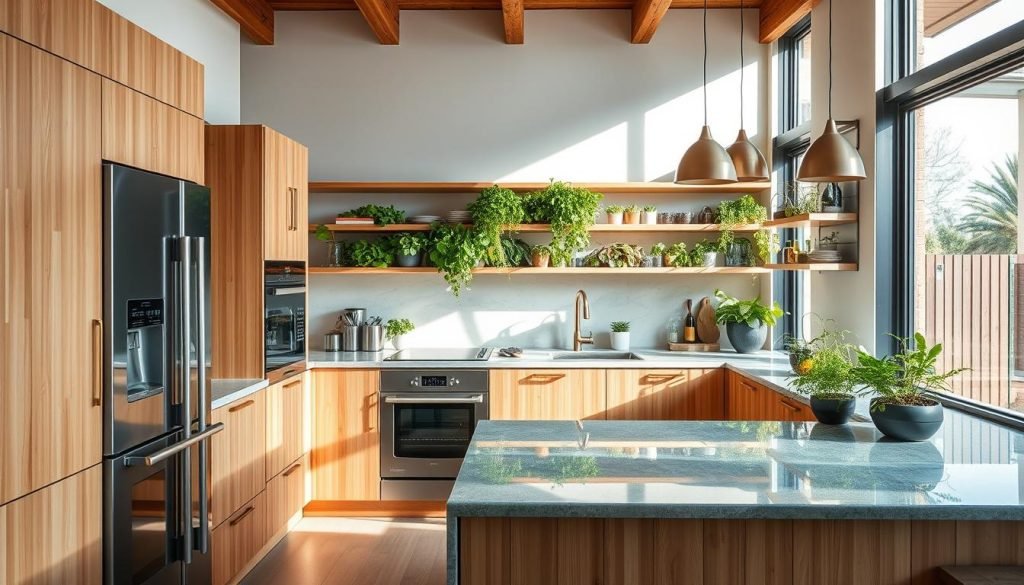
Working with a Green Kitchen Remodeling Contractor
When embarking on a green kitchen remodel, collaborating with a skilled green kitchen remodeling contractor can be immensely beneficial. These professionals bring a wealth of eco-friendly remodeling expertise to the table, guiding you through the process and ensuring your new kitchen aligns with your sustainability goals.
A green kitchen remodeling contractor understands the importance of selecting the right materials, appliances, and design elements to minimize the environmental impact of your project. They can provide valuable insights into the latest advancements in green building technologies, helping you make informed decisions that will pay dividends in the long run.
- Access to sustainable materials and energy-efficient appliances
- Expertise in creating functional and aesthetically pleasing green kitchen designs
- Guidance on maximizing energy and water efficiency
- Commitment to minimizing waste and promoting a zero-waste mindset
By collaborating with a green kitchen remodeling contractor, you can rest assured that your kitchen renovation will be executed with the utmost care for the environment. These professionals will work closely with you to create a space that not only looks beautiful but also aligns with your eco-conscious values.
| Benefits of Working with a Green Kitchen Remodeling Contractor | Eco-Friendly Remodeling Expertise |
|---|---|
| Access to sustainable materials and energy-efficient appliances | Extensive knowledge of the latest green building technologies |
| Expertise in creating functional and aesthetically pleasing green kitchen designs | Commitment to minimizing waste and promoting a zero-waste mindset |
| Guidance on maximizing energy and water efficiency | Ability to navigate the complexities of eco-friendly remodeling |
“Working with a green kitchen remodeling contractor was a game-changer for our project. Their expertise and commitment to sustainability ensured we created a kitchen that not only looked beautiful but also had a minimal environmental impact.”
Eco-friendly kitchen renovation materials
When it comes to creating a sustainable kitchen, the materials you choose are crucial. Sustainable kitchen materials, such as recycled, renewable, or repurposed options, can help reduce your environmental impact while adding style and functionality to your space. Let’s explore some eco-friendly alternatives that can transform your kitchen into a green oasis.
One popular choice for recycled kitchen countertops is concrete made from recycled materials. This durable and versatile option not only looks modern but also helps divert waste from landfills. Bamboo cabinets are another sustainable pick, as bamboo is a rapidly renewable resource that is incredibly strong and durable.
- Reclaimed wood flooring is a beautiful and eco-friendly option that gives new life to salvaged timber, reducing waste and preserving natural resources.
- Glass countertops made from recycled glass bottles can add a unique and eye-catching element to your kitchen design.
- Sustainable cork flooring is a resilient, comfortable, and environmentally friendly choice that can enhance the look and feel of your kitchen.
By carefully selecting sustainable kitchen materials, you can create a kitchen that is not only visually appealing but also environmentally responsible. These materials not only reduce your carbon footprint but also often come with long-lasting durability, making them a smart investment in the long run.
“The greenest building is the one that already exists.” – Carl Elefante, American architect
Remember, incorporating eco-friendly materials into your kitchen renovation is a powerful way to make a positive impact on the environment while enjoying a beautiful and functional space.
Green Kitchen Remodeling Tips
When remodeling a green kitchen, there are several key strategies to consider. First and foremost, opt for low-VOC kitchen materials to improve indoor air quality. Low-VOC paints, sealants, and adhesives release fewer harmful volatile organic compounds, creating a healthier living space.
Energy-Efficient Kitchen Appliances
Another important aspect is selecting ENERGY STAR-rated appliances. These energy-efficient kitchen appliances consume less electricity and water, contributing to long-term cost savings and environmental sustainability.
Maximizing Natural Light
Maximizing natural light through larger windows or skylights can significantly reduce the need for artificial lighting, further enhancing the kitchen’s efficiency. This not only saves energy but also creates a more inviting and pleasant atmosphere.
Efficient Kitchen Layout
An efficient kitchen layout, such as the classic “work triangle” design, can also minimize energy use and unnecessary movement. This thoughtful planning helps to optimize the kitchen’s functionality and flow, contributing to a more sustainable and user-friendly space.
Recycling and Reusing
Finally, when remodeling a green kitchen, consider recycling and reusing existing materials wherever possible. This not only reduces waste but also decreases the demand for new resources, aligning with the principles of a circular economy.
| Green Remodeling Strategy | Benefits |
|---|---|
| Low-VOC Kitchen Materials | Improved indoor air quality |
| ENERGY STAR-rated Appliances | Energy and water efficiency, long-term cost savings |
| Maximizing Natural Light | Reduced energy consumption, enhanced ambiance |
| Efficient Kitchen Layout | Optimized functionality, minimized energy use |
| Recycling and Reusing | Reduced waste, decreased resource demand |
By incorporating these green kitchen remodeling tips, homeowners in Australia can create a sustainable, energy-efficient, and healthier living space that aligns with their environmental values.
“Embracing sustainable design is not just about reducing our impact on the planet – it’s about creating spaces that nourish our well-being and connect us to the natural world.”
Conclusion
Transforming your kitchen into an eco-friendly, sustainable space is a rewarding journey that combines environmental responsibility with modern design. By incorporating sustainable materials, energy-efficient appliances, water-saving fixtures, and thoughtful layout considerations, you can create a kitchen that not only reduces its impact on the planet but also provides a healthier, more comfortable living environment.
With the guidance of experienced green kitchen remodeling contractors and a commitment to eco-friendly practices, you can achieve your goals of a beautiful, efficient, and environmentally conscious kitchen. The journey towards a green kitchen renovation allows you to embrace the principles of sustainable design, contributing to a more sustainable future while enhancing the functionality and aesthetics of your living space.
Whether you’re embarking on a complete kitchen overhaul or simply seeking to incorporate eco-friendly updates, the rewards of a green kitchen renovation are numerous. From reduced environmental impact to long-term cost-effectiveness and a healthier living space, the benefits of a sustainable kitchen design are undeniable. By making informed choices and prioritizing eco-friendly materials and practices, you can transform your kitchen into a hub of sustainability and innovation.